

Learner Agency and Voice: Moving Beyond Compliance
True inclusion goes beyond meeting requirements. It empowers students to participate meaningfully in their own learning. This course explores how to foster learner agency across a range of abilities and communication modes. Participants will examine strategies to support autonomy, choice, self-expression, and voice in classroom routines, planning, and assessment. Grounded in dignity and trust, this course reimagines what it means for students to lead their learning, even in the context of significant support needs.
Start Here
Welcome to the course! This learning experience is designed to help you explore inclusive education through a blend of practical strategies and powerful storytelling. Before diving into the course content, your first step is to choose the story that will guide your learning.
About This Course
This course supports you in building inclusive, flexible learning environments that recognize and amplify the strengths of every learner. While you’ll deepen your understanding through interactive learning interludes, everything begins with story.
Each course is anchored in a set of narrative case studies—realistic, practice-based stories that illuminate inclusive strategies in action. These stories will help you reflect, connect, and see how the course concepts apply in real school contexts.
Choose Your Story
Each story features:
-
A Prologue to set the scene
-
Four Chapters that trace growth, tension, and change
-
An Epilogue to reflect on learning and impact
Choose one story to follow throughout the course. Pick the one that most closely matches your role, context, or interests. This story will provide a consistent lens as you move through the learning interludes and activities.
Not sure which to choose? No problem. You can always return to this page to explore other stories. Many learners choose to follow more than one story to see how inclusive practices come to life in different settings.
What Happens Next?
Once you’ve chosen your story:
-
If you're learning independently, head to the Course Content section and begin with Learning Interlude 1.
-
If you're learning with a facilitator, they’ll guide you through the journey using the facilitation materials provided.
You're ready to begin. Scroll down to explore the stories and pick the one that will guide your path through the course.


A Voice Through Touch
Marisol is a bright, non-speaking Grade 2 student who communicates using a touch-based AAC device. She recently transitioned from a specialized setting in another division into an inclusive classroom at Harvest Hill Elementary. While her new teachers are welcoming and committed, they initially feel uncertain about how to meaningfully include Marisol’s voice in day-to-day classroom life. Most communication with Marisol is limited to basic needs, and while she is physically present, her participation feels peripheral. Group tasks, classroom discussions, and journaling time often move forward without her input, not out of neglect, but because routines haven’t been designed with her communication in mind.
That begins to shift when Marisol’s teacher, Ms. Holtz, attends a professional learning session on communication diversity. She begins to see that Marisol’s silence is not a lack of voice but a signal that the environment isn’t yet offering consistent, dignified entry points for expression. Ms. Holtz and the learning team start redesigning their classroom routines to center Marisol’s voice, not just accommodate it.
They begin by embedding low-risk, high-frequency choices throughout the day. This allows Marisol to contribute to classroom decisions using her device. Soon, classroom voting, graphing, and circle times are adapted to include her input. Visuals and core vocabulary boards are added to whiteboard prompts, and students are explicitly taught how to wait for and respond to AAC-based contributions. Marisol’s classmates start picking up her symbols, gestures, and rhythms, building a new classroom culture around multimodal communication.
As weeks go by, Marisol becomes an active participant in group work, a contributor to shared writing, and a collaborator in creative projects. One day, the class works together to design a mural based on everyone’s ideas, including Marisol’s suggestion of “a big tree where we all fit.” Her classmates light up at the idea, and it becomes the centerpiece of the mural. Marisol’s story is no longer one of accommodation. It is a story of co-creation, shared learning, and agency through touch.
-
Prologue - The Silent Contributor ( 📖 Read | 🎧 Listen | 🎬 Watch )
-
Chapter 1 - Rethinking Participation ( 📖 Read | 🎧 Listen | 🎬 Watch )
-
Chapter 2 - Designing for Input ( 📖 Read | 🎧 Listen | 🎬 Watch )
-
Chapter 3 - Elevating Expression ( 📖 Read | 🎧 Listen | 🎬 Watch )
-
Chapter 4 - Building Belonging Through Voice ( 📖 Read | 🎧 Listen | 🎬 Watch )
-
Epilogue - Agency Beyond the Device ( 📖 Read | 🎧 Listen | 🎬 Watch )

Project-Based Pathways
Horizon Outreach School serves students in Grades 10–12 who have become disengaged from traditional schooling. Many learners have experienced interruptions in their education due to mental health challenges, caregiving responsibilities, or systemic exclusion. At Harmony, teachers are given the freedom to think differently and they use that freedom to reimagine what learning can look like when student voice drives the process.
The shift begins quietly. Instead of pre-designed units, teachers begin asking students: What do you want to learn? What do you want to create? Who do you want to become? Students are invited to co-plan projects that reflect their interests, values, and lived experiences. For many, it’s the first time school has asked those kinds of questions and the first time they feel their voice truly matters.
Teachers scaffold the process with timelines, visual planning tools, and co-created rubrics. Students explore topics ranging from social justice to animal care, music production to parenting support apps. They choose how to present their work. Some record podcasts, others create community installations or host virtual interviews. As autonomy increases, so does confidence.
Eventually, students begin to take on leadership roles, mentoring peers, co-designing classroom protocols, and leading exhibitions. The learning environment shifts from one of compliance to one of contribution. Staff at Harmony realize they’re no longer just teaching content. They’re witnessing young people reimagining their relationship with school, and with themselves.
-
Prologue - Learning on the Edges ( 📖 Read | 🎧 Listen | 🎬 Watch )
-
Chapter 1 - Invitation to Design ( 📖 Read | 🎧 Listen | 🎬 Watch )
-
Chapter 2 - Rethinking Rubrics ( 📖 Read | 🎧 Listen | 🎬 Watch )
-
Chapter 3 - Audience and Impact ( 📖 Read | 🎧 Listen | 🎬 Watch )
-
Chapter 4 - Leading the Process ( 📖 Read | 🎧 Listen | 🎬 Watch )
-
Epilogue - A New Kind of Engagement ( 📖 Read | 🎧 Listen | 🎬 Watch )

From Compliance to Contribution
Kai is a Grade 11 student at Summit Grove Secondary School. Quiet, polite, and often withdrawn, he rarely causes problems—but he also rarely participates. Diagnosed with ADHD and generalized anxiety, Kai has spent years mastering the art of flying under the radar. Teachers see flashes of insight in his writing and occasional discussions, but he often misses deadlines, avoids group work, and seems disengaged from most classroom activities.
Things begin to shift when his English Language Arts teacher, Ms. Lem, offers students the option to respond to a novel study through a podcast, a comic strip, or a traditional essay. For the first time, Kai lights up. He chooses the podcast. Over the next two weeks, he scripts, records, and edits a thoughtful and well-paced analysis episode that not only exceeds expectations, but also reveals a sharp, creative thinker hidden behind the silence.
Recognizing this spark, Ms. Lem introduces flexible timelines, goal-setting tools, and weekly check-ins, not just for Kai, but for the whole class. Kai begins showing up more regularly, suggesting adaptations that work for him, and even advocating for changes that help others. As agency grows, so does his confidence. He moves from quietly compliant to curiously engaged.
By the end of the semester, Kai is co-leading a student discussion on neurodiversity in learning. He’s a different presence. He's energized, expressive, and influential. His teachers reflect that the shift wasn’t in Kai’s ability. It was in their posture. When they let go of rigid structures and began designing with students, rather than for them, learning transformed.
-
Prologue - Quiet Resistance ( 📖 Read | 🎧 Listen | 🎬 Watch )
-
Chapter 1 - More Than One Way ( 📖 Read | 🎧 Listen | 🎬 Watch )
-
Chapter 2 - A Reason to Show Up ( 📖 Read | 🎧 Listen | 🎬 Watch )
-
Chapter 3 - Seeing the System ( 📖 Read | 🎧 Listen | 🎬 Watch )
-
Chapter 4 - Leading with Curiosity ( 📖 Read | 🎧 Listen | 🎬 Watch )
-
Epilogue - A Shift in Posture ( 📖 Read | 🎧 Listen | 🎬 Watch )

From Points to Partnership
Mrs. Graham has been teaching for over a decade at Wayfinder Middle School. Known for her calm, structured classroom, she relies on predictable routines, a points-based reward system, and clearly posted behavior charts. The classroom runs smoothly but over time, she begins to wonder if smooth is the same as meaningful. She notices students complying, but not engaging. They follow rules, but rarely express themselves. Most classroom decisions begin and end with her.
A shift begins after a professional development session on dignity in education. Mrs. Graham is struck by one question: “How often do students get to shape the systems that govern them?” She surveys her class, expecting vague answers but instead receives insightful feedback about fairness, motivation, and the desire for more autonomy.
Encouraged, she removes the points system and co-creates classroom agreements with her students. Together, they explore what it means to contribute to a community. Reflection tools replace behavior logs. Restorative circles become part of weekly practice. As students are given opportunities to take ownership, Mrs. Graham sees them rise to the occasion. They start solving problems, supporting each other, and voicing concerns with increasing maturity.
The real turning point comes when the class organizes a student-led community lunch. From budgeting to invitation design, they manage the event themselves. Mrs. Graham watches from the edges, no longer the controller, but the coach. She journals later that evening: “I haven’t lost control. I’ve gained trust.” Her classroom is no longer managed by points. It’s shaped by partnership.
-
Prologue - The Behavior Binder ( 📖 Read | 🎧 Listen | 🎬 Watch )
-
Chapter 1 - The Question That Lingered ( 📖 Read | 🎧 Listen | 🎬 Watch )
-
Chapter 2 - Making Space for Voice ( 📖 Read | 🎧 Listen | 🎬 Watch )
-
Chapter 3 - Repair and Restore ( 📖 Read | 🎧 Listen | 🎬 Watch )
-
Chapter 4 - Leading the Way ( 📖 Read | 🎧 Listen | 🎬 Watch )
-
Epilogue - Becoming the Guide ( 📖 Read | 🎧 Listen | 🎬 Watch )
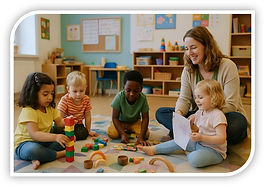
Agency Begins in Play
At Riverstone Elementary, the early learning classroom is filled with energy, imagination, and potential. The children are vibrant storytellers, engineers of block towers, and explorers of bugs and puddles. And yet, their days often follow a rhythm pre-set by adults. Centers predetermined, materials laid out, schedules tightly structured. Educators begin to wonder: What if we listened more deeply? What if our planning followed their lead?
This question sparks a quiet revolution in practice. Instead of simply delivering a play-based program, the early years team commits to co-constructing learning with children. They begin documenting the children's questions, ideas, and play narratives, using these as blueprints for planning. Morning meetings transform into planning circles. Centers are no longer themed by the calendar. They emerge from the children’s fascinations. A single conversation about dinosaur bones becomes a full-blown museum. A pretend kitchen evolves into a bakery with menus, orders, and “customers.”
The educators stop trying to direct every moment and instead begin to trust the leadership of young children. They scaffold emerging literacy, numeracy, and social-emotional learning through play-based experiences rooted in agency. Children choose how to express their ideas through drawing, dance, construction, or storytelling. They take on real responsibilities: documenting the weather, leading classroom rituals, caring for the space, and welcoming visitors.
In this story, agency is not about rushing children toward independence. It’s about honouring their voices and recognizing leadership as something that begins in play, long before formal schooling begins. The classroom becomes a space of shared power, deep belonging, and joyful learning. One where every child knows their ideas matter.
-
Prologue - Tiny Voices, Big Ideas ( 📖 Read | 🎧 Listen | 🎬 Watch )
-
Chapter 1 - Listening Differently ( 📖 Read | 🎧 Listen | 🎬 Watch )
-
Chapter 2 - Thematic Planning Together ( 📖 Read | 🎧 Listen | 🎬 Watch )
-
Chapter 3 - Expression Without Limits ( 📖 Read | 🎧 Listen | 🎬 Watch )
-
Chapter 4 - Responsibility in Little Hands ( 📖 Read | 🎧 Listen | 🎬 Watch )
-
Epilogue - Play as Leadership ( 📖 Read | 🎧 Listen | 🎬 Watch )
© 2025 by The Belonging Project. Website created with Wix.com